




Related Terms:
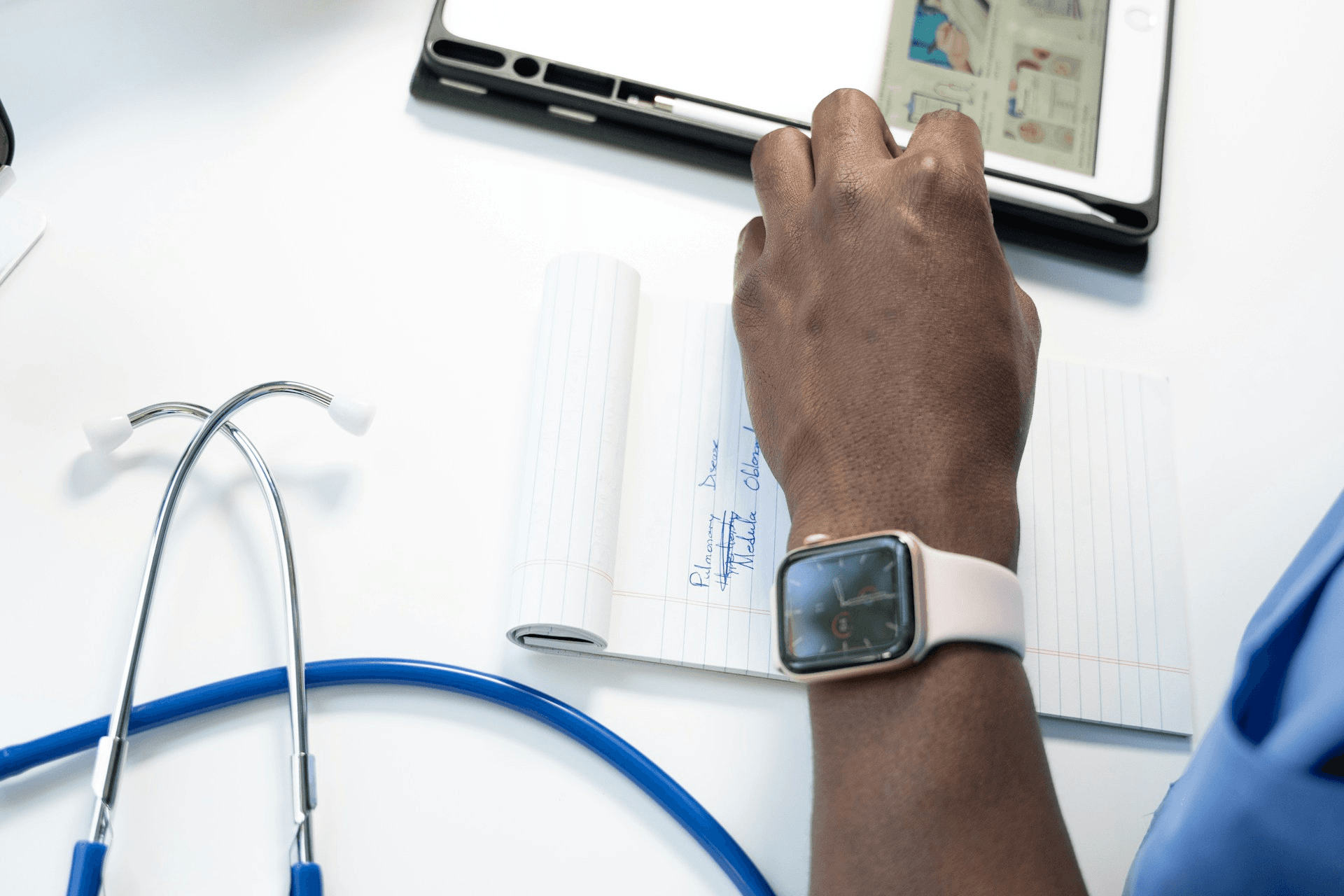
Machine learning applications are everywhere you turn, and healthcare is no exception.
Deep learning, a subset of machine learning models, plays a key role in healthcare. By utilizing artificial neural networks with multiple hidden layers, deep learning algorithms can mimic the human brain. It applies advanced natural language processing (NLP) to unstructured text, like clinical notes and electronic health records (EHRs). Deep learning can also pull insights from large amounts of data, allowing healthcare providers to reduce manual tasks and the risk of human error, while simultaneously offering more personalized care.
This shift in the industry is enabling healthcare professionals to analyze complex medical data, including unstructured data like text, images, and signals. From improved diagnostics to more streamlined operations, deep learning is benefiting providers and patients. Its algorithms progressively learn, making deep learning a crucial component in improving intelligence within artificial intelligence (AI) systems.
The History of Deep Learning
Today, deep learning is a core component of healthcare data science. Based on its capabilities, it has sparked immense interest and rapid progress. However, it's not new. Reports date the inception of deep learning fundamentals back to the 1940s. During this period, developments in neuron-based models inspired the foundations for artificial neural network architectures. These networks continued to evolve until the 1960s, then took a prolonged break. At this time, the single-layer artificial neural network model created limitations.
Later, multi-layer models (input, hidden, and output layers) were explored. This exploration fueled the number of deep neural networks. These networks evolved to tailor models for specific tasks. Based on its non-linear nature, deep learning addresses a range of real-world problems, including those in healthcare.
The Adoption of Deep Learning in Healthcare
By the mid-2010s, deep learning was altering the healthcare industry, with a significant impact on medical imaging and diagnostics.
Today, real-world applications in healthcare are based on deep learning's state-of-the-art ability to improve diagnosis, treatment, and operational efficiency. Medical imaging and predictive analysis are two major areas that have benefited from deep learning. Models range from Large Language Models (LLMs) to specialized architectures, such as Recurrent Neural Networks (RNNs). An example is Long Short-Term Memory (LSTM) networks for time-series data (designed to overcome the vanishing gradient problem).
There are also Generative Adversarial Networks (GANs), specialized deep learning models that can generate synthetic EHRs and other medical data to train AI. This model and training data can enhance medical imaging via image generation and improve diagnostic accuracy using gradient descent. Tools like PyTorch and TensorFlow are also available for healthcare data scientists. These open-source frameworks can be used in various medical domains to improve patient outcomes.
Examples in the Healthcare Industry
When using deep learning in healthcare, providers can achieve expert-level accuracy in image classification and high-performance analysis. From more accurate disease diagnosis to personalized treatment planning, the benefits are many. Here are some primary examples of how you can apply deep learning in healthcare.
Medical Imaging and Diagnostic Support
Deep learning, particularly Convolutional Neural Networks (CNNs), excels at image recognition and object detection, e.g., identifying tumors, lesions, and fractures with high precision. It can analyze MRIs, CT scans, X-rays, and other medical images. The precision of models designed for computer vision is often equal to or better than that of human experts and benefits from supervised learning.
Patient Data Analytics
Deep learning models can analyze electronic health records to predict patient outcomes and potential risks. These models process structured (e.g., lab data, vitals) and unstructured (e.g., clinical notes) data to optimize real-time insights.
Clinical Workflow Efficiency
Addressing time-consuming admin tasks via speech recognition, chatbots, etc., allows staff to focus on quality patient care while reducing the risk of burnout.
Remote Patient Monitoring
GPU-powered AI in wearable devices uses unsupervised learning to analyze patients' vitals remotely. This approach helps providers deliver tailored care programs while preventing potential issues before they occur, such as hypoglycemic events.
The Benefits and Drawbacks
Deep learning in healthcare offers benefits ranging from improved operational efficiency to enhanced diagnostic accuracy and robotics applications. However, challenges also exist, including high costs, data privacy concerns (such as those raised by healthcare apps), and bias.
The primary benefits include:
Enhanced Diagnostics
Can detect concerns early. Backpropagation enables AI systems to improve their diagnostic and predictive capabilities over time.
Great Operational Efficiency
Automates repetitive tasks, such as EHR coding and documentation, to improve workflow.
Predictive Analytics
Analyzes large amounts of data to enable proactive care by predicting risks, such as re-admission or disease onset.
Some of the drawbacks include:
Interpretability
Many deep learning models aren't transparent. This makes it tough for providers to understand how a diagnosis was reached. Without that knowledge, it can be hard to build trust.
Data Requirements and Potential Bias
Models require large, diverse, high-quality datasets. When diversity is low, biased algorithms can skew segmentation and yield unreliable predictions.
Ethical and Legal Challenges
Determining liability for errors made by AI systems remains complex. These concerns include those surrounding data privacy.
The Future of Deep Learning in Healthcare
In recent years, deep learning has shifted from isolated algorithms to multi-model systems. The possibilities continue to evolve, providing new opportunities for higher-quality care and operational success. The ultimate goal is to improve patient outcomes and operational efficiency.
Moving forward, one major change will be the transition from diagnostic aids to actionable AI. Instead of suggesting a potential diagnosis, the next generation of AI will observe, plan, and act. AI agents will be able to navigate more complex clinical workflows, identify patient deterioration, and adjust treatment plans more effectively. For those working in healthcare practices, AI will increasingly serve as a co-pilot for EHR documentation and decision-making.
Longitudinal and multi-model data analysis will become more capable. Deep learning will be able to simultaneously analyze imaging, genomic data, physiological signs, and unstructured clinical notes. Other areas of interest are long-term tracking capabilities and chronic disease management.
Advances in deep learning will also focus on a major goal: providing more personalized, predictive, and accessible patient care in the years ahead. To address latency and privacy concerns, AI processing will move to the "edge" (wearables and other medical devices). To keep up, new regulatory frameworks are needed to ensure the effectiveness and safety of clinical applications.
How TempDev Can Help
Healthcare providers using deep learning are benefiting from higher diagnostic accuracy, improved operational efficiency, and more personalized patient care. And while adoption is rapid and widespread, many still do not fully understand how to implement and maximize the potential of deep learning tools.
To get the most out of your deep learning tools and existing workflows, TempDev can help with fine-tuning. Our expert team of consultants helps healthcare organizations leverage AI and deep learning to achieve various goals. Get support with everything from customized EHR templates and workflow optimization to data conversion services and custom reporting.
Collaborate with TempDev to take advantage of all deep learning has to offer those in healthcare. Contact us today to discuss next steps. Call us at 1888.TEMPDEV or send us an email at info@tempdev.com.
Interested?
Agree with our point of view? Become our client!
Did you enjoy this read? Feel free to share it with your contacts.