


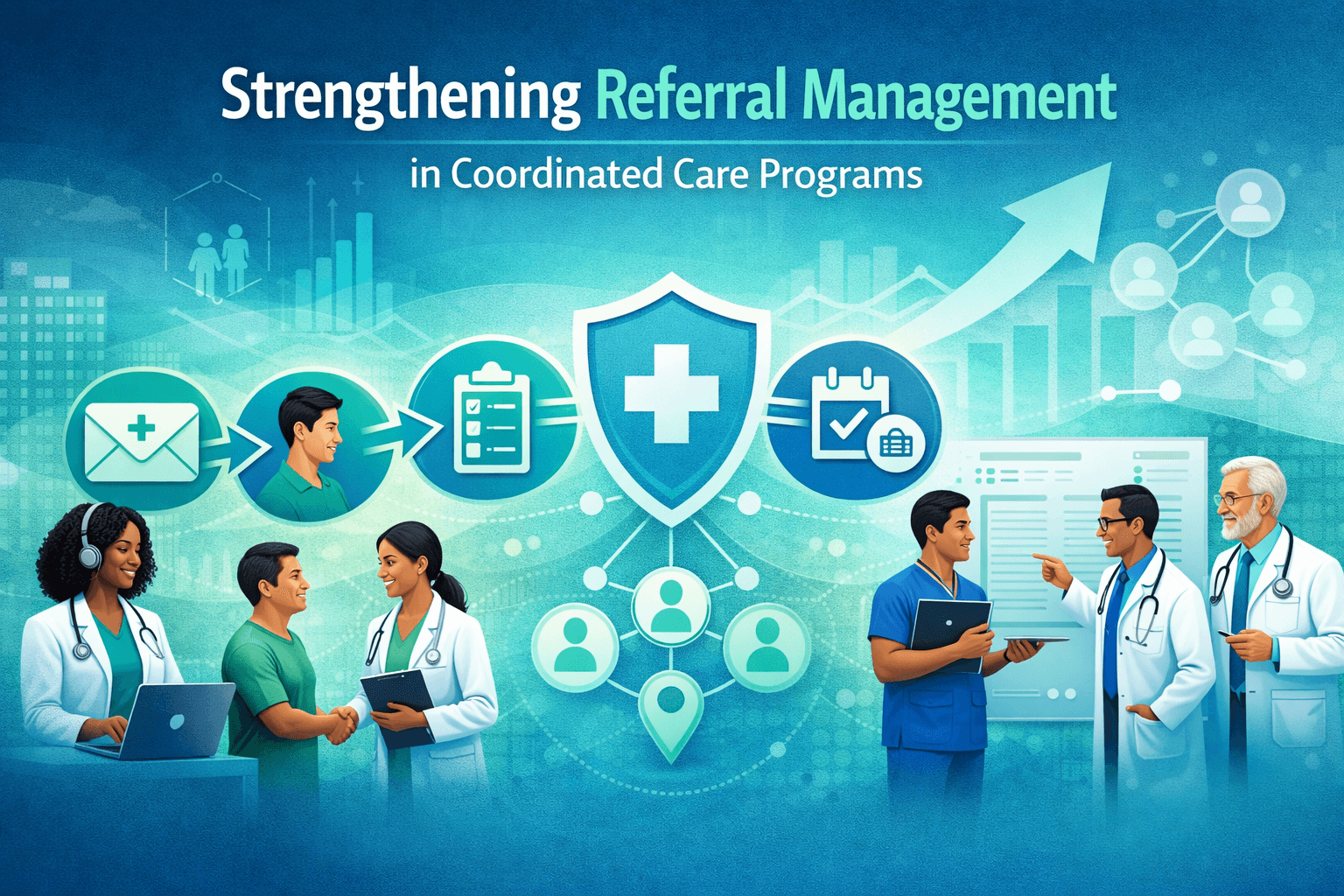
Strengthening Referral Management in Coordinated Care Programs

Related articles:
Optimizing Incoming Referral Workflows for Stronger Care Coordination and Practice Growth
Read ArticleUse TempDev’s NextGen Order Management BI Dashboard to Drive Clinical Insights
Read ArticleNextGen EHR Orders Management Practice Template
Read ArticleHow to Master Your NextGen EHR Workflow
Read ArticleTempDev Helps Practices Upgrade to the NextGen Enterprise 8.3.1 Release for HTI-1 Compliance and Better Usability
Read ArticleReferral management holds coordinated care together. Lose a referral, and patients wait. Specialists lack context. Primary care loses sight of what happened.
For organizations managing programs such as Enhanced Care Management (ECM), Chronic Care Management (CCM), or value-based contracts, these breakdowns cost more than just time and resources. They hit patient outcomes and revenue.
Many organizations treat referrals like paperwork. They are not. In coordinated care, referrals are clinical handoffs. They need structure. Without it, care teams operate in a blind spot.
TempDev helps teams move past broken workflows by building referral management workflows inside NextGen that give staff visibility and reduce click-heavy processes.
Here is how we do it.
Managing Referrals Across Your Entire Practice
Here is something people often miss. NextGen already lets you create referrals. That part works fine. The challenge starts after the referral leaves.
Right now, if you want to check on an outgoing referral, what do you do? Open a patient chart. Check the status. Open another chart. Check again. Staff spend hours clicking through individual records just to see what is still outstanding. There is no single place to look.
TempDev fixes that.
We give your team a single screen showing every outgoing referral across the entire practice. All patients, providers, and statuses. Staff stop clicking chart by chart and start managing referrals holistically. They see what is pending, what is delayed, and what needs follow-up, all in one view.
For busy environments like FQHCs, community health centers, and primary care practices, this changes how work gets done. A care coordinator juggling dozens of patients can spot a stuck referral instantly rather than discovering it three weeks later when a patient calls to complain.
Again, NextGen does not offer real reporting on referrals. Not really. You cannot easily see average wait times by specialty, track completion rates across the organization, or spot which providers have the highest volume or which referral types fall through most often.
Our BI dashboards fill that gap. Administrators have visibility into referral KPIs that were invisible before. How long do patients wait for dermatology? Are cardiology referrals getting stuck more than others? Which locations need support?
For organizations focused on population health optimization, this data is how you manage performance. It is how you prove compliance for programs like ECM and CCM. It is how you move from guessing to knowing.
Tools like our NextGen EHR Orders Management Practice Template enable staff to manage and complete multiple orders from one screen.
That is the value. We do not rebuild what NextGen already does. We give you the tools to manage what NextGen creates.
Improving Care Team Visibility
Once a referral leaves the practice, many organizations lose sight of it entirely. The care team hopes the patient makes the appointment and that the specialist sends a report. However, hope is not a reliable workflow.
TempDev configures NextGen to close this visibility gap. By integrating tracking directly into the system you already use, we ensure the entire care team can see where each referral stands. For example, a nurse coordinating care for a diabetic patient can quickly confirm whether the ophthalmology referral was completed. Likewise, a director at a community health center can see if all required specialist visits are scheduled for their complex patients.
As a result, this transparency transforms referral management from a "send and forget" task into an active care coordination tool. More importantly, it allows your team to intervene early. For instance, if a referral has been pending for three weeks, the care coordinator reaches out to the patient or the specialist's office. Ultimately, this proactive approach strengthens patient trust and prevents costly gaps in care.
Tracking Referral Timeliness and Completion

Visibility is essential, but it needs to lead to action. To truly strengthen your programs, you need data. Are patients seeing specialists within the required timeframes? Which referral types frequently get stuck? Are certain providers experiencing longer delays?
TempDev helps organizations build tracking mechanisms that answer these questions. We design reports within NextGen that monitor statuses, measure time-to-completion, and flag bottlenecks. You gain objective insight into your operational reality.
For organizations focused on optimizing population health, this tracking is indispensable. Value-based contracts for programs like ECM and CCM often include quality measures tied to timely follow-up after hospital discharge or appropriate specialist engagement for chronic conditions. With solid referral data, you can report on these measures confidently. You can also identify improvement opportunities. For example, if cardiology referrals consistently take 30 days longer, you have a clear signal to investigate and address the root cause.
Integrating Referral Metrics Into Executive Dashboards
Operational data becomes most powerful when it reaches the people who make strategic decisions. Frontline care coordinators need to see individual referral statuses. However, clinical leaders and executives need a broader view. They need to understand patterns, spot systemic issues, and measure progress. This is where TempDev's business intelligence expertise adds significant value. We help organizations get referral data from operational reports and into executive dashboards. These dashboards consolidate key metrics into a single, accessible view. Leaders can quickly assess:
Average time from referral order to specialist appointment.
Percentage of referrals completed within established benchmarks.
Referral volume by specialty and by referring provider.
Correlation between referral timeliness and patient satisfaction or readmission rates.
By integrating these metrics into dashboards, referral management becomes a strategic lever. It is a measurable component of your coordinated care performance. Having this data readily available supports regulatory readiness for programs like ECM and CCM.
Our NextGen Order Management BI Dashboard is designed to provide clinical and operational insights at a glance. This helps you make data-driven decisions. (Note: We are also developing an even more specific solution for referrals, coming soon.)
TempDev's approach is always practical. We do not build complex systems that frustrate users. Instead, we focus on creating clear, usable workflows and reports that support your team's daily work. Our goal is to minimize operational friction, not add to it. So, when designing workflows for an FQHC, we ensure they align with how your coordinators actually work. When we build a dashboard, we prioritize the metrics that actually drive decisions.
Strengthening referral management is about applying structure to a process fundamental to coordinated care. With deliberate pathways, enhanced visibility, and actionable data, your organization can ensure that referrals reliably support patient health and program sustainability.
TempDev brings deep NextGen expertise and a practical mindset to this work. We have been helping healthcare organizations simplify complexity and achieve measurable results for over 18 years. Whether you are building a new care coordination program or refining an existing one, we’re here to help you design referral workflows that deliver.
Interested?
Agree with our point of view? Become our client!
Did you enjoy this read? Feel free to share it with your contacts.